Description
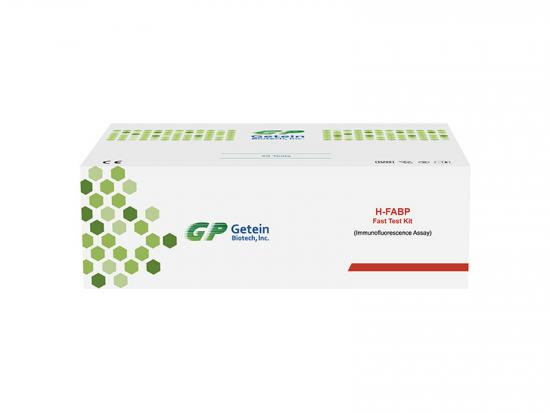
H-FABP Fast Test Kit (Immunofluorescence Assay)
The H-FABP Fast Test Kit by Getein is a quantitative immunofluorescence assay used for the rapid detection of Heart-type Fatty Acid Binding Protein (H-FABP) in human serum, plasma, or whole blood. With a testing time of just 3 minutes, this kit enables early diagnosis of acute myocardial infarction (AMI), pulmonary embolism, and assists in monitoring chronic heart failure.
Key Advantages
- Fast Results: Delivers results in just 3 minutes
- High Sensitivity: Cut-off value at 6.36 ng/mL
- Flexible Sample Types: Compatible with serum, plasma, and whole blood
- Wide Detection Range: 1.0–120.0 ng/mL
- Stable Storage: 4–30°C with a 24-month shelf life
About H-FABP
H-FABP (Heart-type Fatty Acid Binding Protein) is a low molecular weight cytoplasmic protein (15 kDa) abundant in cardiac muscle cells. It is released rapidly into circulation after myocardial injury, making it one of the earliest markers for Acute Coronary Syndromes (ACS). Detectable as early as 30 minutes after ischemia onset, H-FABP is an essential biomarker for early risk assessment and intervention in cardiac events.
Specifications
| Parameter | Details |
|---|---|
| Test Item | H-FABP |
| Sample Type | Plasma, Serum, Whole Blood |
| Detection Method | Immunofluorescence Assay |
| Detection Range | 1.0–120.0 ng/mL |
| Cut-off Value | 6.36 ng/mL |
| Test Time | 3 Minutes |
| Storage Conditions | 4–30°C |
| Shelf Life | 24 Months |
Compatible Devices
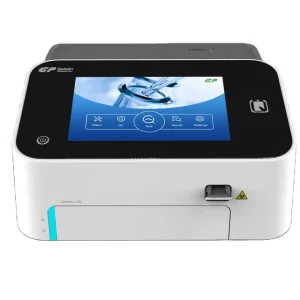
- Getein 1100 Immunofluorescence Quantitative Analyzer
- Getein 1160 Immunofluorescence Quantitative Analyzer
- Getein 1180 Immunofluorescence Quantitative Analyzer
- Getein 1200 Immunofluorescence Quantitative Analyzer
- Getein 1600 Immunofluorescence Quantitative Analyzer
Clinical Applications
- Diagnostic support for various chest pain causes
- Early marker for myocardial injury and AMI
- Risk stratification and early diagnosis of Acute Coronary Syndromes (ACS)
- Monitoring and prognostic evaluation of cardiac treatment