Description
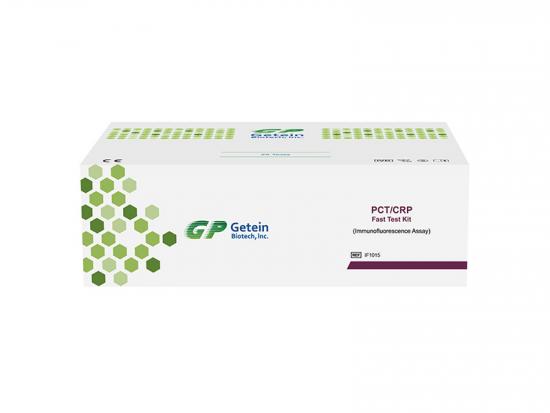
PCT/CRP Fast Test Kit (Immunofluorescence Assay)
The PCT/CRP Fast Test Kit is a quantitative immunofluorescence assay designed for the simultaneous detection of Procalcitonin (PCT) and C-reactive protein (CRP) in serum, plasma, or whole blood. This combination provides a more accurate evaluation of infection type and severity, helping clinicians differentiate between bacterial and viral infections and guide effective antibiotic therapy.
Key Advantages
- Dual Biomarker Detection: Simultaneous measurement of PCT and CRP
- Fast Results: Delivers results in just 15 minutes
- High Diagnostic Accuracy: Enhances infection differentiation and inflammation assessment
- Broad Detection Ranges: PCT: 0.1–50.0 ng/mL, CRP: 0.5–200.0 mg/L
- Flexible Sampling: Compatible with serum, plasma, and whole blood
- Stable Storage: 4–30°C with a shelf life of 24 months
About PCT/CRP
Procalcitonin (PCT) and C-reactive protein (CRP) are key inflammatory markers with complementary roles in infection diagnosis. PCT levels begin rising within 3–6 hours of bacterial infection onset and are highly specific to bacterial infections, whereas CRP rises in both bacterial and viral infections. Combining these markers allows clinicians to accurately assess infection severity, differentiate pathogen type, and guide antibiotic use more precisely.
Specifications
| Parameter | Details |
|---|---|
| Test Item | PCT/CRP |
| Sample Type | Serum, Plasma, Whole Blood |
| Detection Method | Immunofluorescence Assay |
| Detection Range | PCT: 0.1–50.0 ng/mL CRP: 0.5–200.0 mg/L |
| Cut-off Value | PCT: 0.1 ng/mL CRP: 3.0 mg/L |
| Test Time | 15 Minutes |
| Storage Conditions | 4–30°C |
| Shelf Life | 24 Months |
Compatible Devices
- Getein 1100 Immunofluorescence Quantitative Analyzer
- Getein 1600 Immunofluorescence Quantitative Analyzer
Clinical Applications
- Differentiation between bacterial and viral infections
- Monitoring infections post-surgery
- Diagnosis of cardiovascular diseases and inflammatory disorders
- Early detection of neonatal septicemia
- Antibiotic treatment guidance